
The Future of Leadership Starts With You – But It's Never Just About You
Why self-leadership, understanding people, and creating the right conditions are essential for sustainable wellbeing and business success.
By Lina Edenfelt Holst | October 2026
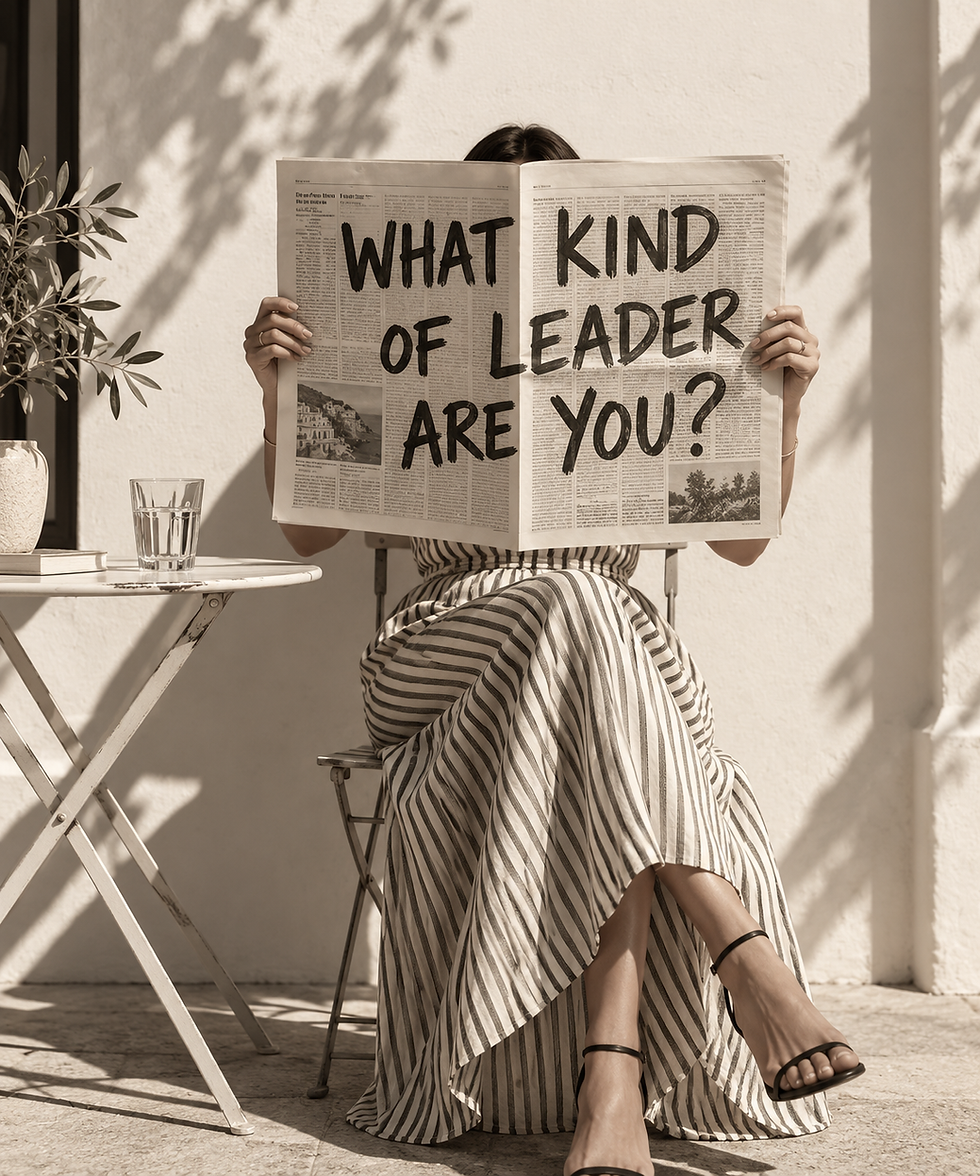
We talk a lot about the future of leadership. About AI, innovation, adapting to change, and the need to keep growing and developing. About how to navigate a world that is changing faster than ever, where both organisations and individuals are expected to be flexible, efficient, and ready for whatever comes next.
But in the middle of all this change, I believe we sometimes overlook something essential: the human being behind the leader.
Because no matter how advanced technology becomes, it is still people who make decisions, work together, manage uncertainty, resolve conflicts, and build trust. People who bring their own experiences, values, and emotions into everything they do. And people who, no matter how skilled or experienced they are, sometimes feel uncertain, stressed, or unsure about which direction to take.
After more than 20 years working in communications, marketing, strategy, business leadership, personal development, and organisational development, I have become increasingly convinced that successful leadership is not simply about having the right skills or delivering results. It is also about understanding people, including ourselves, and creating an environment where both individuals and organisations can grow.
Over the years, I have seen how different it is to develop a good strategy and to actually make it work in everyday life. An organisation can have a clear vision, well-defined goals, and effective processes, but a strategy only becomes meaningful when people understand the direction, feel involved, and have the opportunity to turn ideas into action.
This is where I see an important connection between leadership and self-leadership. To lead others well, we also need to understand how we lead ourselves. At the same time, we need to recognise that people's ability to succeed is never just an individual responsibility.
That is why I believe we need to look at the future of leadership from three connected perspectives: Lead Yourself, Lead Others, and Lead the System.
Understanding ourselves, leading others, and creating the organisational conditions that allow people to grow and succeed.
A Changing World of Work – and Growing Pressure on Leaders
The world of work has always been changing, but today's developments are placing significant demands on both leaders and employees. New technology is changing the way we work and the skills we need, while expectations around efficiency, innovation, and performance remain high. In the middle of all this, leaders are expected to provide clarity, engagement, and a sense of security, even when they don't always know what the future will bring.
At the same time, recent research gives us good reason to reflect on how people actually experience their working lives. According to Gallup's State of the Global Workplace 2026, based on data from 2025, only 20% of employees worldwide are considered engaged at work according to Gallup's measure of employee engagement. In Europe, the figure is just 12%. Globally, engagement among managers has also fallen from 31% in 2022 to 22% in 2025.
These figures do not mean that everyone else lacks motivation or doesn't care about their work. But they do highlight a significant challenge for organisations when it comes to creating engagement. And they raise an important question: How can we expect leaders to build engagement and trust in others if they themselves lack the support, freedom, or opportunity to recover that they need?
Microsoft's Work Trend Index 2026 also shows that organisational factors, such as culture, leadership support, and ways of working, have stronger statistical links to employees' perceived benefits from AI than individual factors do. It is an important reminder that change is not simply about people's willingness or ability to develop new skills. Organisations also need to create the right conditions for people to put those skills into practice.
For me, this reinforces the importance of leadership that focuses not only on what people are expected to achieve, but also on what they need in order to succeed.
Lead Yourself – Self-Leadership Starts With Self-Awareness
When we talk about self-leadership, many people think about setting goals, managing priorities, planning their time, and taking responsibility for results. These are all important skills, but I believe self-leadership begins with something more fundamental: the relationship we have with ourselves.
It starts with understanding who we are, what drives us, and how our thoughts, emotions, values, and experiences influence the way we see and respond to the world.
We all develop habits and patterns of behaviour that can support us in some situations but hold us back in others. Perhaps we feel a strong need to be in control when things become uncertain. Maybe we find it difficult to delegate because we are used to taking responsibility ourselves. Or perhaps we avoid difficult conversations because we don't want to disappoint anyone.
These reactions are human. But when we begin to understand our own patterns, we also gain a greater ability to choose how we respond. A leader who recognises their need for control can begin to practise trusting others. A manager who becomes aware of their defensive reactions may find it easier to respond to criticism with curiosity rather than immediately feeling the need to defend themselves.
Another important part of self-leadership is understanding how we respond to stress. Research shows that acute stress can affect our working memory and cognitive flexibility, which, in certain situations, can make it harder to consider different perspectives and adapt our thinking.
For anyone leading others, this is particularly relevant. When we feel under pressure, we may react more quickly and find it harder to give ourselves time to think. We might interrupt someone, become less attentive, or make decisions before considering the bigger picture.
This is why I often use simple reflection tools that help us step out of autopilot. One of them is STOP: Stop, Take a breath, Observe, and Plan your next step. It is not a solution to every problem, but it can be a useful reminder that we don't always have to act on our first impulse.
Sometimes the most helpful next step is to ask a question instead of defending ourselves. Sometimes it is having a difficult conversation, asking for support, or setting a clearer boundary. And sometimes it is recognising that the problem is not how we are reacting, but the situation we are in.
For me, self-leadership is not about always being in control of ourselves. It is about developing enough self-awareness to make more conscious choices.
Lead Others – Understanding the Person Behind the Performance
When we understand ourselves better, we also become more aware of how our behaviour affects others. One of the most important things to remember about leadership is that people are different, even though we sometimes organise work as if everyone thinks, feels, and works in the same way.
Two people can have the same role and work towards the same goals, yet need different conditions to grow and perform well. One may feel motivated by freedom and responsibility, while another may benefit from clearer guidance and more regular feedback.
Throughout my years as a leader and working with different organisations, I have become increasingly interested in what helps people grow, develop, and want to contribute. Because behind every job title and every result is a person with their own experiences, motivations, and needs.
That doesn't mean lowering expectations or treating people unfairly. Good leadership still needs clarity, fairness, and shared goals. But it also means recognising that different people may need different kinds of support to achieve those goals.
This is where our own behaviour as leaders becomes especially important. If we say we want an open culture but become defensive whenever someone questions us, we may be sending a very different message. If we encourage people to take responsibility but then try to control every decision, we limit the freedom we say we want to create.
Research also suggests that a leader's emotional expressions can influence others in a team, although the effects depend on the situation and how those behaviours are understood. This doesn't mean leaders must always be positive or hide their emotions. It simply reminds us to be aware of how our communication and behaviour may affect the people around us.
An important part of this is creating psychological safety. Researcher Amy Edmondson describes psychological safety as a shared belief within a team that it is safe to take interpersonal risks, such as asking questions, admitting mistakes, or expressing different opinions. Her research found a positive relationship between psychological safety and learning behaviours within teams.
To me, this means creating an environment where people are both encouraged and expected to think for themselves, share their perspectives, and take responsibility for their work. An environment where we can disagree without damaging relationships, and where mistakes can become opportunities to learn rather than something we try to hide.
It also means seeing the whole person. We don't just bring our skills and experience to work. We bring our energy, emotions, relationships, and needs. Our mental, emotional, physical, social, and sense-of-purpose wellbeing are connected and influence how we function in everyday life. This doesn't mean managers should become therapists or take responsibility for their employees' personal lives. It simply means recognising that performance can never be completely separated from the person behind it.
Understanding people is not an alternative to good business leadership. It is part of building organisations that work, grow, and succeed.
Lead the System – Creating the Conditions for Sustainable Results
However important self-leadership and human relationships may be, we cannot ignore the organisations in which people work.
Throughout my work in business leadership, strategy, and organisational development, I have seen again and again how important it is to connect strategic direction with what actually happens in everyday working life. It is one thing to create an inspiring vision or describe the culture we want. The real challenge is often turning those ambitions into clear priorities, effective ways of working, and everyday behaviours.
Organisational culture is not created simply by the values we put on a wall. It is shaped by how we lead, the decisions we make, what we measure, the behaviours we encourage, and what we are willing to accept.
The same applies to health and wellbeing. We can encourage employees to prioritise recovery, work sustainably, and set boundaries. But if the organisation continues to reward constant availability, lacks clear responsibilities, or expects more than its resources allow, the message becomes contradictory.
This is where I believe the conversation about self-leadership needs to go further.
As interest in stress management, recovery, and personal development grows, there is also a risk that we place too much responsibility on individuals. As if the solution to an unhealthy working environment is always to become better at prioritising, managing emotions, or building resilience.
But individual tools cannot replace healthy and effective organisational conditions.
In its 2026 report, The Psychosocial Working Environment, the International Labour Organization (ILO) highlights how factors such as workload, autonomy, role clarity, and organisational processes influence the psychosocial working environment. The World Health Organization (WHO) also emphasises the importance of combining individual support with organisational action to promote mental health at work.
This means we need to work from two perspectives at the same time. We need to help people develop self-awareness, manage challenges, and make conscious choices, while also examining the structures and expectations that influence their ability to succeed.
Sometimes an employee needs support with prioritising or setting boundaries. In other situations, it is the workload, level of responsibility, or the organisation's way of working that needs to change. Often, it is a combination of both.
For me, this is at the heart of sustainable leadership. Understanding that people and performance are not separate issues, but are closely connected. We need clarity, accountability, and progress, while also creating conditions where people can develop, contribute, and maintain their wellbeing over time.
The Future of Leadership Requires Both Courage and Awareness
I don't believe the leaders of tomorrow need to be people who are always calm, always have the answers, or never doubt themselves. Instead, I believe we need leaders who have the courage to keep learning, growing, and sometimes questioning their own established ways of thinking.
Leaders who can combine strategic thinking with genuine curiosity about people. Who are willing to set a clear direction and make difficult decisions, but who can also listen, reconsider, and acknowledge when something needs to change.
In my own work, I often come back to the importance of taking a moment to pause and reflect. Not to overthink or delay decisions, but to become more aware of what we are actually doing and why. As leaders, it can be valuable to ask ourselves whether our priorities and behaviours reflect what we want to achieve, how our actions affect others, and what kind of conditions we are creating for the people around us.
Sometimes development begins with a conversation, a change in priorities, or a decision we have been putting off. Sometimes it begins when we dare to question something we have always taken for granted. And sometimes it simply begins when we pause and ask ourselves what is truly needed, for ourselves, for others, and for the organisation we are responsible for.
For me, sustainable leadership is not about choosing between people and results. It is about understanding how they work together. Developing our ability to lead ourselves, treating others with clarity, respect, and curiosity, and building organisations where people have the opportunity to grow and contribute.
Because in the end, I don't believe the most important measure of a leader's success is only what they have achieved themselves. It is also about what other people have been able to become, contribute, and achieve along the way.
The future of leadership starts with you.
But its true value lies in what you make possible for others.
Lina Edenfelt Holst
For speaking engagements, consulting, workshops, or coaching, please get in touch.


Comments